By Muriel Porter
We all read the Bible imaginatively to a certain extent without necessarily recognising it, according to English Scripture scholar Dr Paula Gooder.
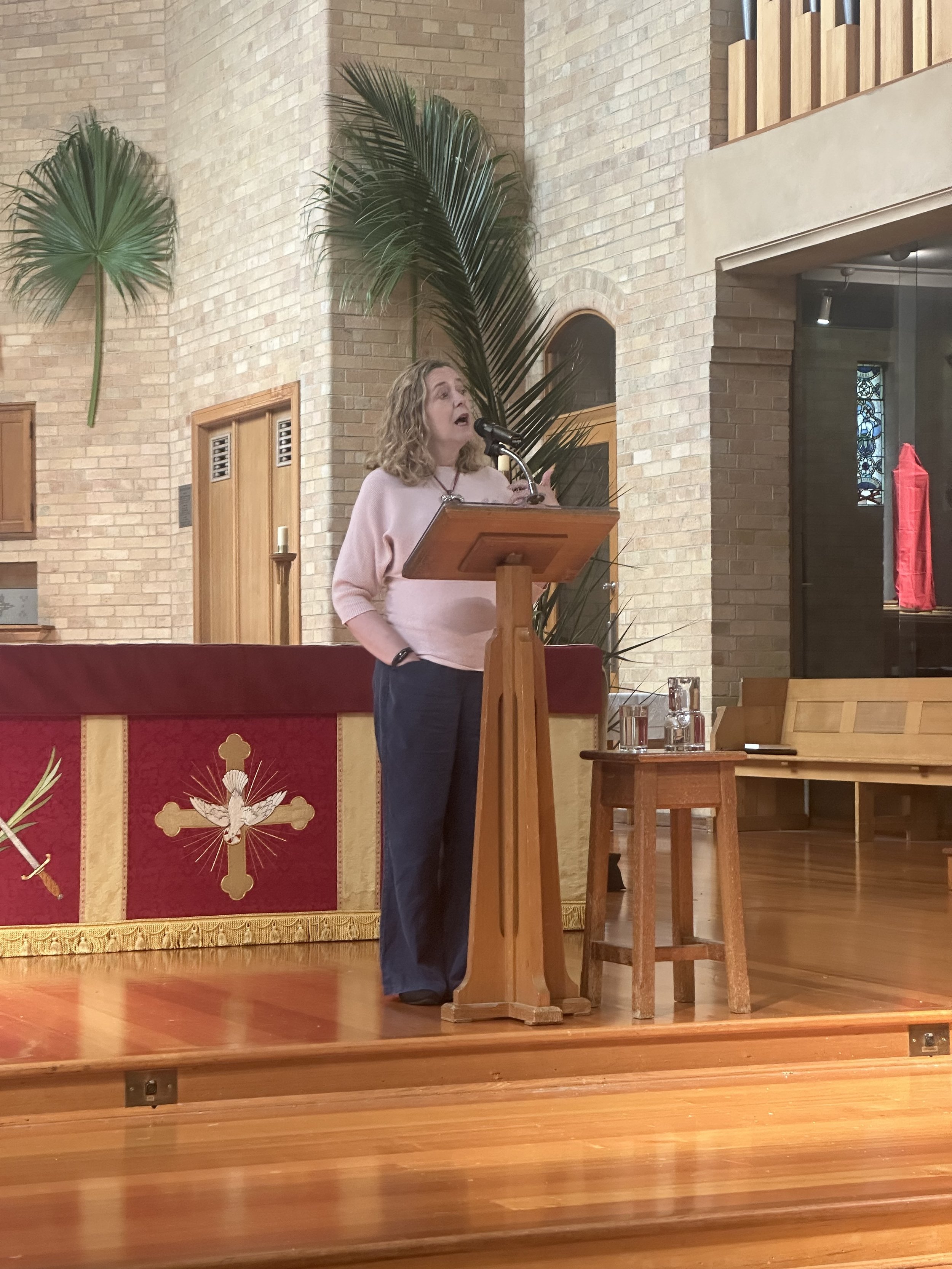
Image credit: supplied.
Nativity plays are a prime example of this, she said, citing the number of additional characters and events, without any biblical origin, usually added to the plays. For instance, there is often an innkeeper’s wife added to the cast, she said, when there is no innkeeper’s wife in the Gospel account. Imagination has been used to fill in the gaps in the biblical account.
Dr Gooder, who is Canon Chancellor of St Paul’s Cathedral, London, a lay reader in the Church of England and a prolific author, was speaking at an event held by Victorian Anglicans Together at St John’s, Camberwell, last month. She was in Melbourne as scholar-in-residence at Trinity College Theological School.
Another example she offered was depictions of the Last Supper. Leonardo da Vinci’s famous painting is the picture we usually have in our minds, she said, but we could “count the ways” da Vinci got it wrong. Not least would be the setting of them all sitting on one side of the table, she said. But that was da Vinci’s imaginative response.
Dr Gooder explained that she has become passionate about imaginative biblical reading because, when we bring our imagination to reading the Bible, “something important happens”. She quoted the respected American theologian Walter Brueggemann, who said that
“imagination is the capacity to host a world other than the one that is in front of us”. He continued: “Such an act of hosting an alternative world is inherently subversive, as it serves to question and override the world in front of us that we too easily take as given… It is important for congregations and pastors to remember that we are primarily in the imagination business.” (‘The End of Imagination?’ 2023).
Becoming adept at deliberately hosting the story of Jesus, she said, opens us up to seeing the world as Jesus saw it. It takes time, but if we start to imagine for ourselves, we can fill in aspects of the stories to help us understand what is going on, she said. This was in fact an ancient Jewish method of Scriptural interpretation (‘Haggadah’) and is utilised in Ignatian spirituality.
“It pays you to pay very close attention to the text,” she said, to see what is actually there and not what you always thought was there. It was very important, too, to read across the Gospels, not just be limited to the chunks from the lectionary read in church. We can miss what came before and what came after the lectionary segment. The Gospel writers, she added, were story tellers.
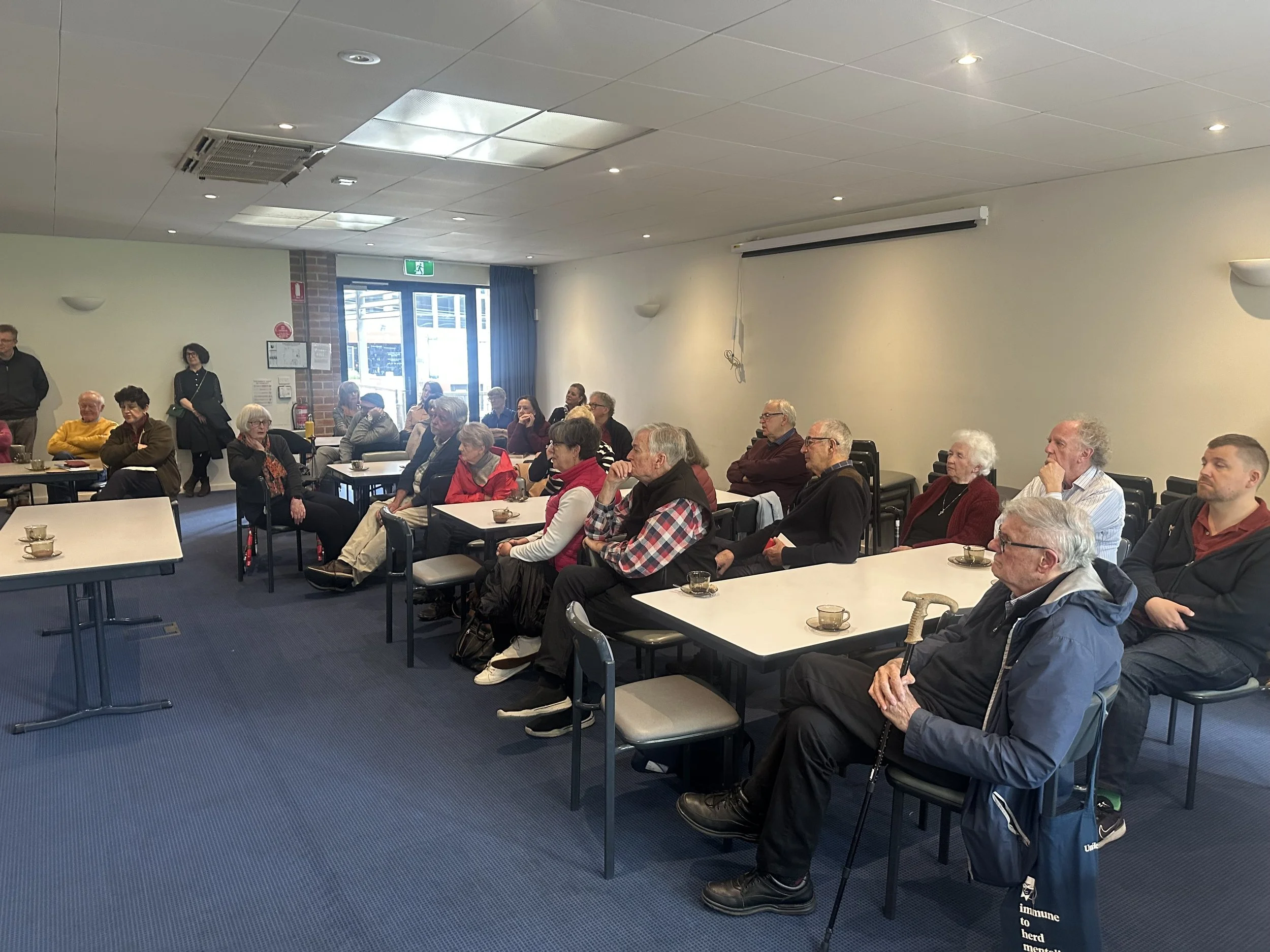
Image credit: supplied.
She continued that the Gospel stories can become effectively like just a photo album if we don’t see the stories as being about actual people with actual lives. Bringing our imagination to the stories helps us begin to get into their stories.
Dr Gooder ended her address by reading one of her new imaginative stories about an unnamed Gospel woman, the woman bent double healed by Jesus as described in Luke 13:10-17. A story about this woman, to whom she has given the name Rebecca, is included in a collection she was working on while in Melbourne. Women of the Gospels isdue for publication in August, and follows her other imaginative readings of the lives of New Testament women, including her quasi novels about women who ministered with St Paul, Phoebe and Lydia.